October 20, 2026 · 2 min read
From the quarry to the pallet: how facade stone is cut and sorted before it reaches you
The journey of facade stone from a block in the mountain to a wrapped pallet on your site: cutting, sawing, finishing, grading, sorting and packing, and where color and quality are decided.
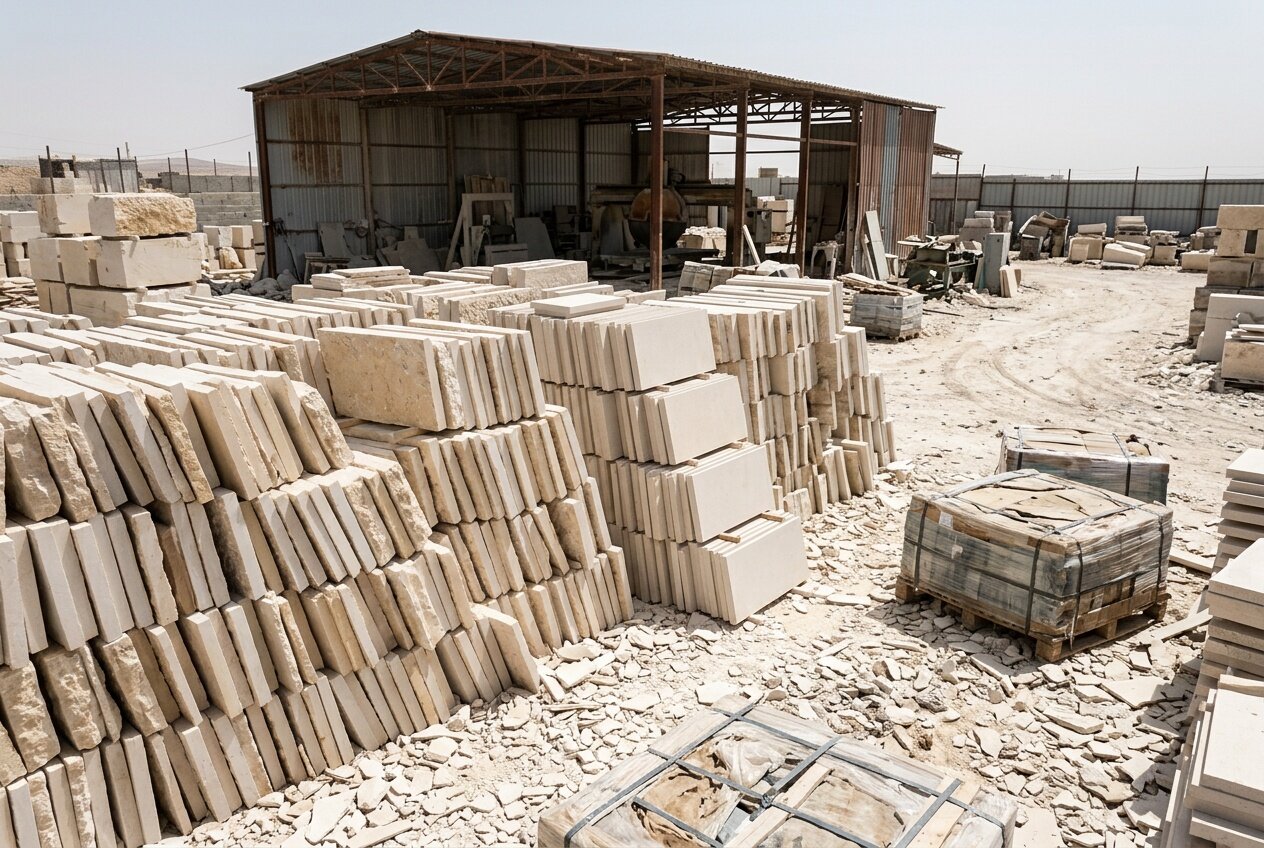
The facade stone you see on a pallet at your site has been through six stages since it was part of a mountain. At each one, a small decision fixes the color and quality of your facade for decades. This is the journey as we follow it at Diwan.
1. The block in the quarry
A quarry does not produce finished stone. It produces large blocks, separated from the mountain with diamond wire and heavy saws. Every block comes from a specific layer, and every layer has its own color and porosity. The first decision is made here: which layer your project's quantity is cut from. We reserve the blocks for the whole quantity from one layer before sawing begins.
2. Sawing
The blocks go to the gang saw, which turns them into slabs of the required thickness, then to smaller saws that cut them into pieces at the agreed course height and length. What comes out of this stage is sawn stone: a flat face with faint cutting lines. This is the base state that every finish is measured against.
3. Finishing
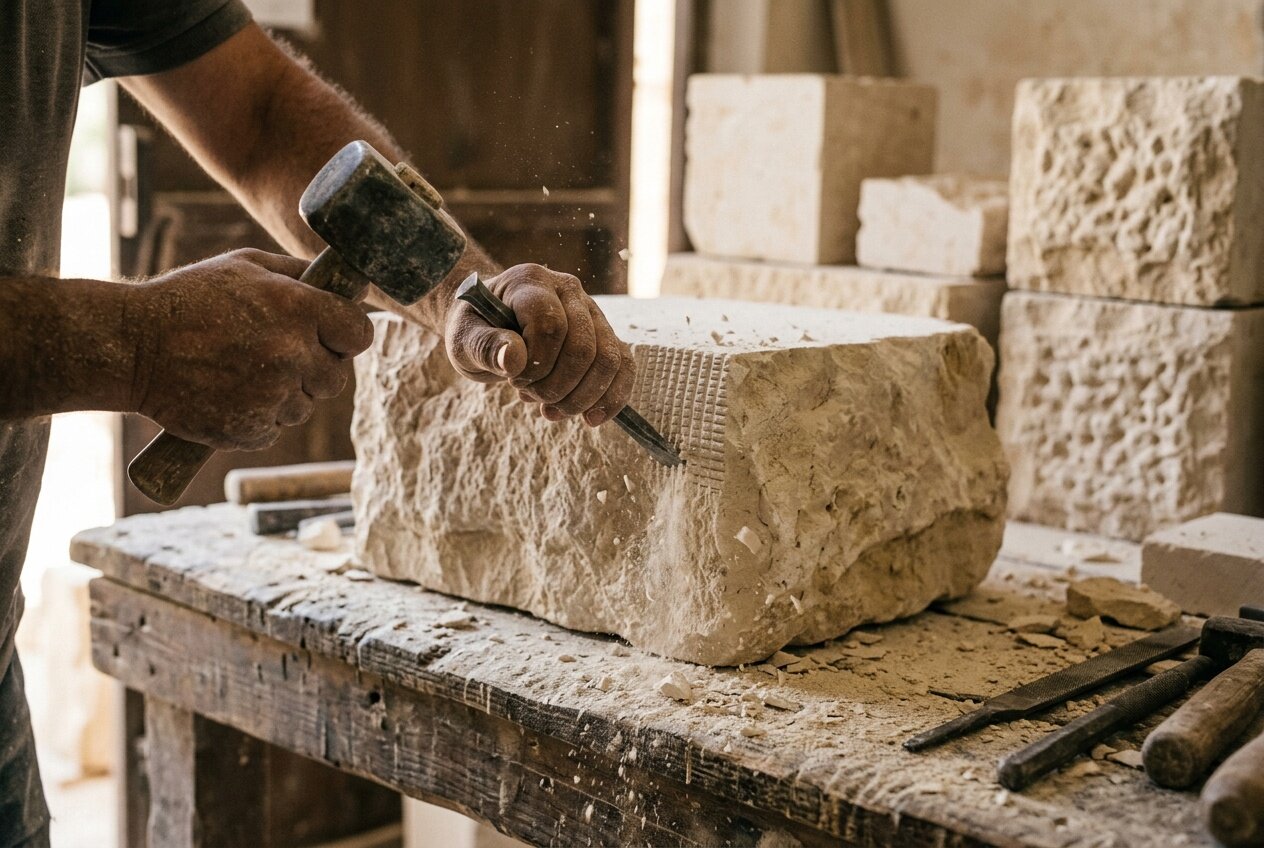
If your facade is musamsam, tubzeh or bush-hammered, the pieces are finished now. Machine finishes pass down one line; hand finishes are worked by masons with a chisel, piece by piece. Tubzeh needs thicker stone from the start, so the finish is decided before sawing, not after. Every finish is described in the finishes guide.
4. Grading
Not everything that leaves the saw is the same quality. Pieces are divided into grades by porosity, veining and hairline cracks. First grade is less porous and more even in color, and it is what we supply for facades. Lower-grade pieces go to other uses; they do not get slipped into your shipment to make up the quantity.
5. Sorting on the ground
This is the stage many suppliers skip, and the one that makes the visible difference. The pieces are laid out in daylight and compared side by side, and anything off in color or veining is pulled out. Ma'an, Ruwaished and Hebron stone all carry a slight natural gradient. Sorting does not remove it; it makes sure it stays slight and evenly spread, instead of the lighter pieces ending up on one floor and the darker ones on another.
6. The pallet
The pieces are stacked on timber pallets to a calculated weight, stretch-wrapped, covered on top and strapped. The wrapping protects the stone from sun, rain, dust and mortar water on site. Before loading we photograph the pallets and send you the pictures, so you see what is coming before it moves.
What to ask any supplier
- Which layer was the quantity cut from, and was all of it cut in one period?
- Which grade is being supplied, and are all the pieces that grade?
- Were the pieces sorted on the ground before stacking?
- Are the pallets wrapped and covered, and can I see photos before loading?
If the answers are clear and in writing, your facade is safe. See the stones in the stone guide, or request a sample to hold the real piece before you decide.
Mentioned in this article
See it in the catalog#quarries#stone cutting#sorting#pallets